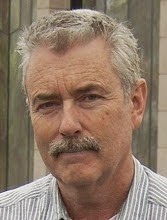
I’ve been thinking about changing my career. I need something that will make people sit up and take notice. Currently I’m retired. That has absolutely no energy. Stranger: “What type of work do you do?” “I’m retired.” It used to have a little more energy in the title when I sold insurance. Even that, however, conjures up images in their mind of some little emasculated man sitting at a desk. Thick glasses. Bald head. Beady eyes.
Now that I’m retired the sky’s the ...limit. How about oil derrick laborer? Images immediately pop into their mind—big muscles, gritty face, hard work. It would be easy to transition from retirement to working on an oil derrick. I simply announce it. Hopefully I would not be offered a job on an oil rig, but if that happened, I would go. After all, that is my job.
Another great job would be a scuba diver. Not just a run of the mill scuba diver, but one that specializes in sunken treasure. There the images in your mind dance vividly—sunsets on the ocean; a tight fitting wet suit; a bearded captain steering the boat as I dive into the depths. I could easily be a scuba diver. The table conversation would be greatly entertaining. I can see them now looking at me askance with one eyebrow raised. That’s the challenge--Playing the part when you don’t look like it.
My imagination really took off, however, after reading an article by travel writer Rick Bragg. He travels and writes for Southern Living. He thought it would be attractive to announce that he bred bulls. Now that requires no imagination. What a conversation stopper! Or better yet, starter. You wouldn’t have to say anything else. Other men would just look at you in awe. Women would demurely turn away. You wouldn’t have anything to prove. Just smile.
Sunday, August 20, 2017


Saturday, January 10, 2015
THE NIGHT SKY

I miss the night sky where I grew up on the south coast of Oregon. In the spring I would help my dad check the sprinklers on the cranberries when the temperature dropped below freezing. Often it happened about 3:00 in the morning. It was an incredible sight. Our milky way galaxy is approximately 100,000 light years across. However, the nearest star is a little over 4 light years away. If you left earth in a commercial jet at 500 mph, it would take over five million years just to get there. Do you feel small yet?
Friday, October 31, 2014
AND SUCH WERE SOME OF YOU


One of the things I like about Christians is their diverse background. That is not readily apparent if you just walk into a church. It takes time to get to know people and learn their story. The title of this blog is from I Corinthians 6:11. Sexually immoral, idolaters, adulterers, homosexuals, thieves, the greedy, drunkards, revilers, and swindlers. I'm sure it was just a partial list. The best part is that the list is in the past tense. This paragraph speaks of real victory. These were real people with real issues. They had significant victory over big problems. They were in chains, and now they are free. It's interesting that those who choose to keep their chains want others to see them as not having a problem. They want full acceptance of their lifestyle. If you question their choices, it is seen as condemnation. The fact is, there is no advantage in remaining in a destructive lifestyle. However, there are perceived advantages, and that is where we start having cultural battles.
Friday, October 17, 2014
MARK TWAIN QUOTE
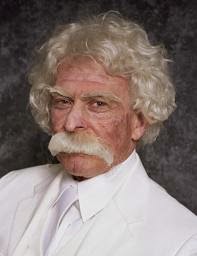
Mark Twain was a keen observer of his fellow man. As a result, we have a myriad of quips and comments he has passed down for future generations to enjoy. The other day I came across one that really made me think: "Every civilization carries the seeds of its own destruction, and the same cycle shows in them all."
It's fairly easy for me to see the shortcomings of other cultures which will result in their demise--graft and corruption, tribalism, nepotism, lack of work ethic, and many other areas that are easy to identify.
It's a little more difficult to see weaknesses in my own culture, but they are there, and we read editorials about them frequently--the breakdown of the family, racism, materialism, and you can add your own pet peeve to the list.
Things get interesting when we apply Mark Twain's statement to corporations. John Brooks wrote Business Adventures, which has become a classic in the business world. He tells stories about the mistakes of big corporations, along with an analysis of where they went wrong. Basically he is giving examples of Mark Twain's statement as it applies to business.
But let's not stop with corporations. How about families? We're all aware of unspoken rules and expectations passed down to us by our parents. Our early years also shaped the way we respond to criticism, and how we handle an affront.
The question I ask myself is, "What seeds of destruction are in me?" We have all seen someone self-destruct. We think, "how sad." Alcoholism, anger, bitterness, lust, greed, are just a few destructive seeds that can germinate at an inopportune moment and destroy 20 or 30 years of relationships that we have worked hard to build.
The seeds of destruction don't have to germinate. We don't have to water the soil. We don't have to respond to life the way we were brought up. I have found the best response is to conform my goals to Jesus. The Sermon on the Mount goes into great detail about how to live productively and not allow destructive seeds to grow.
Saturday, October 11, 2014
ANXIETY

Ok it's been 8 months since the last post. I've been too busy with Twitter and Facebook. Sometimes anxiety rules. The first step to finding peace in our circumstances is to recognize God's sovereignty. 99% of our anxiety is from a lack of understanding that God is in control. Easy to say, hard to live by. Everytime we end a prayer by saying "...in Jesus' name" we are actually telling God to run that prayer through his sovereignty filter. Too often we put that on the end of a prayer because that's what we were taught to say. That little phrase is perhaps the most important part of our prayer.
Tuesday, February 25, 2014
SPRING AGAIN

Here it is spring again. Early seasonal flowers make allowances for the rain. I have been active on Twitter and Facebook. Neglecting the blog. I like blogging, but no one reads blogs anymore, so these entries are for my enjoyment only. The problem with Facebook is that babies rule. Babies, puppies, and kittens. Blogging is so much deeper.
Wednesday, April 24, 2013
TRIBALISM

Tribalism seems to be a lot in the public awareness. We read about tribal conflicts in both the Middle East and also in Africa. We pride ourselves in being beyond that. We are, for the most part, a culture following the "rule of law" rather than pursuing revenge to save the honor of our group. However, with the ability to get news from a news organization I agree with, I am purposefully limiting my exposure to a specific viewpoint. In addition, my twitter account tends to follow those I agree with. I send my kids to a school that teaches what I believe, and attend a church whose doctrine I find least offensive. There's nothing wrong with any of that, but how do I expose myself to ideas that I might not agree with? Aren't we increasingly becoming more diverse as a culture rather than more homogenized? Originally, it took about one generation for assimilation. It was common for parents to forbid their children to speak the language of their country. Now, we encourage diversity and polarization. We see it happening in politics, religion, and languages. Won't we eventually fall apart as a culture? In the meantime, if your views are different than mine, I probably won't even know it.
Sunday, February 17, 2013
CONCEALED CARRY

Is it my imagination, or do those who carry a concealed weapon have a higher than normal amount of paranoia? Reading some of the internet comments in concealed carry chat rooms, you get the impression that the bad guy can jump out at you at any time, and you had better be prepared. Granted, it could happen, but so could any number of mishaps. So far I have never been in a situation where I wished I had a weapon. That's not unusual, since I am not a police officer, and I try to avoid going into risky situations that might compromise my ability to stay alive. However I have no problem with those who do carry, because I strongly believe that the 2nd amendment gives them that right. We also need to remember that good guys who carry are on our side. Our recent shooting at Clackamas Town Center demonstrated that. The gunman commited suicide once he was confronted by a private citizen with a gun. We couldn't ask for a better outcome. Actually I feel safer in public if I am aware that there are those among us who could respond to that type of threat. There seems to be an unusual fear of guns in the more populated areas. That will surely increase as our culture (except for the criminals) has less and less experience around guns. Familarity with guns brings respect and less fear. Unfamilarity with guns causes fear and unfounded paranoia. May every parent teach their child the proper use of guns. May every gun owner excercise secure storage and access to his weapons.
Tuesday, January 29, 2013
Here is what happens if you try to rob the wrong diner. If you are going to use a gun, make sure you are entering a gun free zone.
Wednesday, January 16, 2013
FORKS OVER KNIVES

Recently Lin and I watched this video. It is available on Hulu at no cost. Basically they emphasize the advantages of a plant based diet. I suggest you watch it and take from it what fits your goals. Those in the video are totally vegan. In other words, they eat no meat of any kind including fish, and no dairy products. I like the plant based emphasis, but their logic to avoid fish and chicken doesn't hold up. Also, there is no way I'll give up eating a reasonable amount of dairy. The most compelling information on this video is what happens when a country's diet starts trending toward the fast food of the developed nations. Consequently, Lin and I are a lot more aware of the advantages of plant based eating, and the importance of moderating our intake of foods such as red meat, milk, cheese, and concentrated sweets. Watch the video, and tell me your impressions.
Saturday, January 5, 2013
ON BEING SICK
After lying around half the day walking around in my socks and talking with a really deep voice I have finally decided to relax and spend time on twitter, instagram, and blogging. No reason to feel guilty. Working outside just makes a head cold more miserable. The best part is Lin feeling sorry for me and bringing me special treats, like blended carrot/apple/lemon. I had to eat it with a spoon. Now she is making coffeecake muffins.
We listened to This American Life on OPB. Most of their human interest stories seem to dwell on someone trying to find answers to life's deep questions. I sit here listening, and think, "I know the answer to that." Why does every generation have to find it out for themselves? It might be nice if when we hit age 21 they put a helmet on our head with all kinds of wires running over to a giant computer and remove all the mush and insert wisdom. That would be a nice way to grow up.
Unfortunately the answers to the deep questions still have to be mined. I'm reminded of the parable about the man who found a great treasure and sold all he had so he could purchase the field in which it was buried. I think Jesus was saying that deep truths have to be sought out with great effort. We need to put aside our personal preferences and get serious about it.
We listened to This American Life on OPB. Most of their human interest stories seem to dwell on someone trying to find answers to life's deep questions. I sit here listening, and think, "I know the answer to that." Why does every generation have to find it out for themselves? It might be nice if when we hit age 21 they put a helmet on our head with all kinds of wires running over to a giant computer and remove all the mush and insert wisdom. That would be a nice way to grow up.
Unfortunately the answers to the deep questions still have to be mined. I'm reminded of the parable about the man who found a great treasure and sold all he had so he could purchase the field in which it was buried. I think Jesus was saying that deep truths have to be sought out with great effort. We need to put aside our personal preferences and get serious about it.
Wednesday, November 28, 2012
AIRPORT DUDES

I ran into these dudes at the airport, but fortunately was able to placate them by asking them to pose.
Friday, November 9, 2012
WHAT'S AT THE BOTTOM?

I'm wondering if the bottom of the cliff is scary after all. Don't we agree that the road to daylight out of a 16 trillion debt will be painful? Perhaps we should bite the bullet and all suffer collectively. The result would be 25% unemployment, continued recession, and higher taxes. Wouldn't that be worth it if it eventually results in sound fiscal recovery for our grandchildren? How many years will we kick the can down the road?
Thursday, November 1, 2012

Sunday, September 9, 2012
HAPPINESS AND OTHER THINGS

Ok, time to blow off some steam.
We hear a lot today about the economic differences between first and third world nations. We use a lot more natural resources and our standard of living is much higher. It's interesting that a higher standard of living does not necessarily correlate with being more content or happy. I think I know why. We are prisoners of our success. Happiness seems to be connected to something other than possessions.
I watched a movie about the lost boys of Sudan. In one scene a boy calls home. It is a one way conversation. His mother is telling him to send money, now that he has a job. From her perspective, he has it made. He doesn't even try to explain that he is broke. He knows she wouldn't understand if he tried to explain his efforts to afford car insurance, health insurance, rent, and a host of other expenses that she doesn't have. So he patiently listens to her diatribe and tells her he loves her before ending the call. You get the distinct impression that he wishes he could go back to the simple life. His face has "trapped" written all over it.
I felt sorry for him. I was raised in this culture from infancy. He was thrust into it as a teenager by well meaning adults from an outside culture. It's no wonder he was depressed. Did we bring him to the United States to live the good life of facing the stress of a 40 hour work week? What if we would have invested the same amount of money to train him to set up a business in his own culture? Perhaps his happiness quotient would have been higher if he had remained in his own culture as an independent business owner. What makes our culture so superior that we think it is the only road to success?
Like I said, just blowing off steam.
Tuesday, August 7, 2012
WHY BAD THINGS HAPPEN

Timothy Keller has some interesting comments in this article about the danger of people asking "why me?" when something bad happens. Maybe a more fitting question would be "why not me?"
Tuesday, June 26, 2012
THE BLAME GAME

I have been fascinated by our tendency to blame others. I'm referring to all of us. When something happens that I don't like, it seems easier to bear if I don't take any responsibility. Let's start with the way I am now. I'll blame my upbringing. It was something specific that happened to me that made me the way I am. Something in my childhood. Perhaps it was a pattern of behavior in my family that occurred over several years. Maybe it was just one traumatic incident that scarred me forever.
How about daily activities? I drop a glass on the floor and it shatters into a thousand pieces. Do I blame myself? Of course not. My spouse was talking to me and distracted my attention. I can be angry at her! My child wets the bed. I know, it's my wife's fault for not reminding me to take them to the bathroom right before bedtime. It's nice when I can blame others. It's so convenient. It feels so good to not be at fault for bad things that happen.
If I perfect it enough, I'll never have to take the blame for anything that ever happens. It makes me feel so good. President Obama is a good target. Such a public figure, and so vulnerable, so available to take the blame.
We had a speaker at a men's retreat talk about his battle with sexual addictions. He made a comment to his father on a morning walk that he wasn't sure why he did those things. His father responded, "You did it because you wanted to."
What would happen if we all took full responsibility for our actions? How would it change our communication with our spouse? Would it impact my job? How would it change the judicial system? What would the impact be on international relations? I can't change the world, but I can start by taking full responsibility for everything I do and say. No excuses. The buck stops here. Good idea. Blame Harry.
Thursday, June 21, 2012
VICTORIAN DREAM

Tuesday, June 5, 2012
HEADING FOR THE CLIFF

Remember the historical stories about how the Sioux Indians killed buffalo? They would drive them off a cliff. It wasn't a pretty sight. We have the same thing happening now with our economy. Take a look at this article.
Sunday, May 20, 2012
SQUEEZING THE BALLOON

When I was a kid I enjoyed squeezing balloons. It always seemed to pop out somewhere else, no matter how you positioned your fingers. The part that squeezed through was noticeably thinner than the rest. It always seemed to evade the boundaries of my hands.
Now I realize that I was learning a tactile lesson in childhood that would become an abstract concept in adulthood. Whenever you put on the squeeze, it pops out somewhere else. You can apply this principle to almost anything. Take early childhood discipline. The toddler is always pushing the envelope. "If I'm not allowed to do that, then I'll do this."
It get more interesting in adult relationships.
Did you notice the freeway speed is about five miles over what the signs say? In California, it's ten. Pushing the boundaries. We all have to squeeze the balloon.
How about politics? Pass a law, and the people it affects will most likely squeeze the balloon and there will be unintended consequenses. Nixon tried price controls. That didn't last too long, and what an explosion of prices when the controls were lifted! Now we are in the middle of health care reform. No one know where that is going, but I can guarantee you that the balloon will find its way out between the fingers of reform.
So is there a life lesson in all this? Perhaps it is to not squeeze too hard. There is a law of physics involved here.
Saturday, April 14, 2012

POWERS OF 10
Check out this video. It's been around for awhile, but needs to be viewed once or twice a year just to keep life in perspective. It reminds me of what David Needham used to say about God's attributes--that what we know about God is only what he has chosen to reveal to us about himself.
Sunday, April 1, 2012
RICE AND BEANS MONTH

March is Rice and Beans month. We participate every year in cooperation with Lahash.org. It's a great way to bring your perspective of food back into line with reality. It raises money to buy rice and beans for the vulnerable in Africa. We do it by donating the amount of money we save by not eating our traditional American fare. I can't think of a better way to keep our brothers and sisters in Africa on our mind. Now that the month is over, it is back to traditional food. However, it has given me a love for various rice and beans recipes that I did not have previously. Everyone is invited to participate at whatever level they feel comfortable. Lin and I made it our main evening meal. (We were limited in the last part of the month by some traveling.) Others do it for two or even three meals each day. You can add seasoning and vegetables to taste. We try to avoid adding meat, since they don't have the privilege of eating a lot of meat in East Africa. I am already looking forward to next year!
Thursday, February 23, 2012
WOMEN2DRIVE
 Several weeks ago women2drive was a world news event. I discovered the phrase on twitter. As hard as it is to believe, women in Saudi Arabia are not allowed to vote or drive. There is a very strict dress code for women. They cannot appear in public without a family member male escort. There are morality police who cruise around looking for violators. A few brave women have tried to buck the system, but paid for it dearly by having their jobs taken away. I don't think there will be any real change until sympathetic husbands, fathers, and sons become involved. I don't think those of us in the western world can really understand how different their culture is from ours. I don't have an answer. However, I would like to visit Saudi Arabia. I think it is a fascinating country with a lot of history, and I do like history. I would enjoy camping in the desert, walking through a huge shopping mall, or visiting the beach resort. I would like to try their food, and visit a private home. Maybe some day I will.
Wednesday, January 4, 2012
ALL TOGETHER

We were all together for Christmas. This is the whole clan, with another little one due in April. It is hard to imagine that 35 years ago it was just the two of us!
Wednesday, December 14, 2011
SLEEPING AND OLD AGE

I have always slept well. That is, until I hit my 60's. Suddenly, the ability to go back to sleep is becoming elusive. I'm not sure what has changed. My diet remains constant. I still have the same wife, dog, and cat. The neighbors haven't changed in years. We've lived in the same house for over 20 years.
But now, when something wakes me up, the chances of remaining awake are much greater. I don't think it's hormones. Only women have that problem. I have had great sympathy for Lin in that area. Men are supposed to be able to roll over and resume peaceful slumber within a few minutes. I have been proud to count myself in that group for years. Women, however, once they hit the magic age, remain awake for hours if they are disturbed. Lin even keeps a book at the ready with a little flashlight. Thank God for little flashlights. I know now why God has younger people have babies. It would be a different world if old people had to get up at night to change a diaper. I think they would be zombies during the day. Not to mention that a 60 year old woman having a baby would probably destroy her body.
Actually, remaining awake at night does have it's advantages. I lay there wondering why I was so sleepy in the first place. Why could I hardly hold my eyes open at 9, and then be Mr. Big Eye at 2? There are all kinds of things to think and pray about. It's interesting that when you get one issue taken care of in your mind, that another one floats to the top to take its place. It's like dross floating to the top when you purify a metal. My mind is pure gold, and there are these nasty things that don't float up until I wake up during the night. I wonder if my brain is over-heated? That might explain the dross. So I finally get up and change the venue. Like moving to the couch. That's when the images surface. Images of bacon and eggs, fresh biscuits, jelly, cold milk. If I ate everytime those evil pictures presented themselves, I would weigh 400 pounds. Fortunately my will power goes into action and eventually the hunger subsides. A small glass of milk does the trick.
I think I see certain advantages to retiring. People who only sleep 3 hours the night before are not the quickest minds at the office. At least when you retire, you can join the legions who take a morning nap. I used to think only babies take naps. Now I realize that there are growing millions of people who nap after breakfast. My opinion of them has gone from disdane to sympathy. I am trying to figure out how I can avoid the same fate. When I'm focused at work I don't get sleepy, even when I've shortchanged my sleep. Once I retire, I can see the temptation of the easy chair. I see the solution clearly: When I retire, I need to keep busy during the day. The Bible has some bad things to say about those who slumber. However, it also says that He gives his beloved sleep. Maybe it depends on the context.
Tuesday, October 25, 2011
OFF TO AFRICA

Son-in-law Dan leaves soon for East Africa. Follow his adventures on the Lahash.net website. I always get a little nervous when he makes his semi-annual visit to the partners in Africa. After all, I have a daughter and grand-daughter remaining behind. I'm always glad when he returns safe. I know he is in God's hands so I keep reminding myself of that. When our children were small it was nice when they were all at home in the nest. Now they travel on a whim. Do they ask my permission? No. Should they? No. I felt in greater control when they were young. I know, my feelings of control were an illusion. I keep reminding myself of that. With every stage of life comes renewed commitment to God. I suppose when I am 95 they will worry about me.
Tuesday, September 6, 2011
NATIONAL DEBT: A FIVE MINUTE PRIMER

See this CNN article on the national debt. What can I do? Have no personal debt, and establish a rainy day fund. It may be needed.
Monday, August 15, 2011
OREGON CITY YARD SALES
 We spent Saturday morning walking the hills of old Oregon City, stopping at multiple yard sales. It was the one weekend each year when the whole town tries to get organized and sell their junk. The most enjoyable part of it was admiring the historic houses. Many of them have plaques identifying the original owner. Some have been designated as historic landmarks. Those fortunate few receive a property tax discount for 15 years. The yards around the homes are the most interesting. Some have traditional grass, but many look like a jungle. This photo is representative of a typical side yard. It looks as if you tried to walk through, that vines would grasp you about the head and neck. In fact, most of their children under the age of two are lost in such a manner.
Tuesday, July 26, 2011
"MATCHES MAN"

Animals in a home can be a blessing and a curse. We have two cats; an evil, black & white tom cat (Nike) who reminds me of Osama, and a mild-mannered grey cat (Tofie) who reminds me of a sick, spoiled teenager.
We did not ask for either cat. Nike was an orphan in a box, found by my daughter when he was about 3 weeks old. We had to purchase a special bottle and formula to feed him. In the beginning, after being fed, he would lay on his back with a swollen kitten belly and eyes closed in contentment. It was only later that he turned evil.
Tofie was found at a family gathering in Coquille, Oregon. We found out later that the neighbor boy in Coquille had been mistreating her. Consequently she ran away and was found by my nephew Andrew on the front lawn of my parent’s home. We ended up taking her home to Portland, since the other family members were not in a position to own another pet.
Tofie is not evil, but she does evil things. By that, I mean she does not intentionally throw up on the carpet three times a week after eating a bowl of dry cat food, and running like a bandit when we attempt to catch her between retches to toss her out the front door. We have taken her to the vet, and are currently feeding her hair ball formula and trying to limit her intake, so please don’t accuse us of cat abuse. Her favorite thing is to jump on someone and “make biscuits” on their stomach. Except for the vomit, she is a good cat.
Nike is evil. He reads the daily comics and studies Bucky the cat in great detail. He practices bad thinking and doesn’t care what you think. We had him fixed years ago, and I don’t think he has ever forgiven us. To put it bluntly, he is not a Christian. He daydreams of taking flying lessons and crashing large planes into tall buildings. Need I say more?
We also have a black and white Boston Terrier. Her name is Pekah Boo. Normally, a female Boston should weigh in at about 18 pounds. Pekah is a hefty 40 pounds. Needless to say, she is strong, like the women in Minnesota. However, unlike the women of Minnesota, she cannot handle the cold very well, and would not survive even one day outside in the winter. She lives in the house and has access to the outside through a doggie door that she can barely squeeze through. We have to lay down old bath towels when it rains. Paw prints have a way of showing up on a wood floor. We have two animal houses in the backyard. Both are heated by an electric light. The cats love it, but Pekah is afraid to go in either house. I have never met a dog that is afraid to enter a dog house. It doesn’t make sense. I live in a human house, and I’m not afraid to enter my house. Perhaps she thinks she is human.
Another unusual trait Pekah has is a lisp. She tries, but cannot talk correctly. “Bad thing” becomes “bad ting.” “Love you” becomes “dove-oo.” I normally wouldn’t know this, but Lin is the dog interpreter. Otherwise, I wouldn’t know when Pekah is sad or happy, or wants to go to the office for the morning. Lin tells me when Pekah wants to gorge out on a bowl of leftover macaroni and cheese, or a pile of chicken bones. I have no idea what the dog is thinking.
However, when it comes to the hard things, I step up to the plate. Pekah sleeps on the floor by my side of the bed. It is my job to cover her up at night when Lin pokes me. Pekah tells her to poke me and do my job. I also am the Matches Man. I keep a little book of matches on my nightstand for those special evenings following her overindulgence of wieners or a large ham bone. It is not unusual to be awakened out of a sound sleep. I imagine it is somewhat like putting smelling salts under the nose of a person that is unconscious and near death. I know that if it ever happens when camping, I would bang my head on the ceiling of the camper. There isn’t a lot of head room. Thankfully, that has never happened. At home, however, I have on occasion, sat straight up in the middle of the night, with only one thought—to find the matches. The smell always hits me first, and by the time it drifts over to Lin she is gagging as well. My groping in the dark usually knocks my cell phone or glasses onto the dog below. She is sleeping soundly, of course, because a dog never seems to be aware of flatulence. She looks at me quite perturbed for disturbing her lovely dream.
Eventually, the blessed smoke fills the room and our gasping changes to normal breathing. We usually fall back to sleep in a short while. Sometimes I think our nights are more exciting than our days.
We did not ask for either cat. Nike was an orphan in a box, found by my daughter when he was about 3 weeks old. We had to purchase a special bottle and formula to feed him. In the beginning, after being fed, he would lay on his back with a swollen kitten belly and eyes closed in contentment. It was only later that he turned evil.
Tofie was found at a family gathering in Coquille, Oregon. We found out later that the neighbor boy in Coquille had been mistreating her. Consequently she ran away and was found by my nephew Andrew on the front lawn of my parent’s home. We ended up taking her home to Portland, since the other family members were not in a position to own another pet.
Tofie is not evil, but she does evil things. By that, I mean she does not intentionally throw up on the carpet three times a week after eating a bowl of dry cat food, and running like a bandit when we attempt to catch her between retches to toss her out the front door. We have taken her to the vet, and are currently feeding her hair ball formula and trying to limit her intake, so please don’t accuse us of cat abuse. Her favorite thing is to jump on someone and “make biscuits” on their stomach. Except for the vomit, she is a good cat.
Nike is evil. He reads the daily comics and studies Bucky the cat in great detail. He practices bad thinking and doesn’t care what you think. We had him fixed years ago, and I don’t think he has ever forgiven us. To put it bluntly, he is not a Christian. He daydreams of taking flying lessons and crashing large planes into tall buildings. Need I say more?
We also have a black and white Boston Terrier. Her name is Pekah Boo. Normally, a female Boston should weigh in at about 18 pounds. Pekah is a hefty 40 pounds. Needless to say, she is strong, like the women in Minnesota. However, unlike the women of Minnesota, she cannot handle the cold very well, and would not survive even one day outside in the winter. She lives in the house and has access to the outside through a doggie door that she can barely squeeze through. We have to lay down old bath towels when it rains. Paw prints have a way of showing up on a wood floor. We have two animal houses in the backyard. Both are heated by an electric light. The cats love it, but Pekah is afraid to go in either house. I have never met a dog that is afraid to enter a dog house. It doesn’t make sense. I live in a human house, and I’m not afraid to enter my house. Perhaps she thinks she is human.
Another unusual trait Pekah has is a lisp. She tries, but cannot talk correctly. “Bad thing” becomes “bad ting.” “Love you” becomes “dove-oo.” I normally wouldn’t know this, but Lin is the dog interpreter. Otherwise, I wouldn’t know when Pekah is sad or happy, or wants to go to the office for the morning. Lin tells me when Pekah wants to gorge out on a bowl of leftover macaroni and cheese, or a pile of chicken bones. I have no idea what the dog is thinking.
However, when it comes to the hard things, I step up to the plate. Pekah sleeps on the floor by my side of the bed. It is my job to cover her up at night when Lin pokes me. Pekah tells her to poke me and do my job. I also am the Matches Man. I keep a little book of matches on my nightstand for those special evenings following her overindulgence of wieners or a large ham bone. It is not unusual to be awakened out of a sound sleep. I imagine it is somewhat like putting smelling salts under the nose of a person that is unconscious and near death. I know that if it ever happens when camping, I would bang my head on the ceiling of the camper. There isn’t a lot of head room. Thankfully, that has never happened. At home, however, I have on occasion, sat straight up in the middle of the night, with only one thought—to find the matches. The smell always hits me first, and by the time it drifts over to Lin she is gagging as well. My groping in the dark usually knocks my cell phone or glasses onto the dog below. She is sleeping soundly, of course, because a dog never seems to be aware of flatulence. She looks at me quite perturbed for disturbing her lovely dream.
Eventually, the blessed smoke fills the room and our gasping changes to normal breathing. We usually fall back to sleep in a short while. Sometimes I think our nights are more exciting than our days.
A GOOD TIME WAS HAD BY ALL

It is a little disconcerting to see your age reflected back to you in the faces of those you haven't seen for 45 years. Time is not kind. We had 85 students graduate from Bandon, Oregon in 1966. This was a small representation of some of us who met last weekend in Vernonia, hosted by classmate Bud Dow, who happened to be temporarily away when this picture was taken.
Tuesday, July 19, 2011

Friday, July 15, 2011
GRANDCHILDREN
 There's nothing like an afternoon in the sun with grandchildren. They like riding in the wagon. Lin gave them a tour of the backyard. She explained the plants and talked about the joys of shade and cool grass. They don't hold still very long, and they don't stay small for long.
Sunday, June 5, 2011
RELATIONSHIPS MATTER
 Relationships matter. You can be the most successful of all your peers in financial planning, but if you accomplish that goal alone, it is in vain. Building relationships is more important than building a solid financial future.
I occasionally meet an older person who has no connection with any family members. After talking with them for a while I can usually determine what might have been the cause. Sometimes it's a history of alcoholism. Other times they are just plain mean. Sometimes there are multiple layers of dysfunction that have pushed away everyone they meet.
The most important relationship you can have is with God. I'd hate to reach a ripe old age and have all my financial ducks in a row except knowing where I was going to end up after I die. Not knowing would take the fun out of growing old. I think that not having made peace with God would lead to all sorts of anger and dysfunction.
When you make peace with God at the beginning of your financial journey, it makes the whole experience enjoyable.
Tuesday, May 31, 2011
EDUCATE YOURSELF
 The next step is to educate yourself. As I mentioned previously, you can begin by subscribing to a financial resource such as Money. Read everything you can, and focus on what you are familiar with.
 From there, you will find your horizons expanding into related subjects. Eventually you will be somewhat knowledgeable. Never hesitate to ask questions. Look for financial classes at the local community college.
The big payoff to you is that you will eventually have the ability to self-direct your investments. It is a payoff, because you can choose no-load mutual funds instead of paying an investment advisor to handle your money. If you want to buy individual stocks, you can use an internet service such as E-Trade, which charges far less commissions than a full service brokerage house.
Wednesday, May 25, 2011
STICK WITH MUTUAL FUNDS

A big mistake we make when we start saving money is to not leave it alone. Once the account balance reaches a certain level we begin thinking where we could invest all that cash. It is very tempting to start buying and selling stocks.
There is only one way to purchase individual stocks, and that is to buy and hold. Otherwise, it is just a sophisticated form of gambling. In my opinion, the vast majority of the public should avoid individual stocks. It is too risky.
A much safer method is to purchase mutual funds. It spreads the risk. Instead of investing in just a few stocks, a mutual fund allows your risk to be spread over thousands of companies with a small amount of money. You won't have the big gains of an individual stock, but you won't have the potential for big losses either. If you educate yourself, you can use a no-load company such as Vanguard. If that scares you, go visit a financial advisor. However, be prepared to pay a commission, typically $5.75 for every $100 invested. There are mutual funds for every level of risk.
Just before the 2008 economic downturn I invested a large sum for an older couple. The market at the time was red hot. However, because of their age and ignorance regarding finances, I recommended a mutual fund specializing in government securities. Prior to this time their money had been in CDs. Shortly afterwards, the market crashed. Their investment, however, continued to earn almost 6%. Their risk tolerance and age dictated a conservative approach. If they had been able to educate themselves and self-direct their money, they would have saved even more by not paying commissions. For them, however, they made the right decision.
It's never too late to get started. Read the Wall Street Journal. Subscribe to Money magazine. Take charge of your financial future.
Sunday, May 22, 2011
AVOID PYRAMIDS AND GET RICH QUICK SCHEMES
 When I was 14 years old, a friend of the family approached me about selling soap. It was called Zif. As he explained how it worked, I thought it sounded pretty good. I paid him $12 for a starter kit, and then hit the streets selling soap. The real money, however, was if I could get others to sign up. I would get a percentage of their start up money, as well as part of their soap sales, and those under them, and those under them etc. I lasted two days. I decided I wasn't a salesman. I didn't know it at the time, but that was my first exposure to pyramid sales.
 With pyramids, the people who get in first make the money. This type of marketing is still around in many forms. Another name for it is multi-level marketing. When I was a young adult, Amway was big. The appeal was always about how much money you could make, or how you could own your own business. In my opinion, if you want to be a business owner, choose a legitimate career.
However, there are much worse critters out there, called get rich quick schemes. These will suck out all your blood and leave you dead on the highway. They appeal in a very base way to human greed. As my dad used to say, if it sounds too good to be true, it usually is.
My sister lives in a small Colorado town. A man came through selling investment opportunities. It was very convincing, especially since so many townsfolk were signing up. In the end, many lost their entire life savings. The greatest danger is in thinking that it can't happen to me, because I'm too smart.
Some of the sharpest minds in the financial world let themselves be taken in by Bernie Madoff. It seems like every week I read similar articles of innocent people losing their retirement savings. A friend of mine heard about a glowing investment opportunity on Christian radio. He lost all his retirement ($200,000) and owes the I.R.S. $10,000.
There is a lesson here for all. Be very careful. Make sure they are not appealing to your greed. Be aware of investments that put time constraints on you. Make sure they are licensed with your state. All companies and representatives selling securities are required to have a securities license in their state. Take a look at the overall picture. As I said previously, if it is sounds too good to be true, it usually is.
Saturday, May 21, 2011
BE A CONTRARIAN

When it comes to keeping up with the Jones', be a contrarian. This is a popular word in the financial world, usually referring to someone who sells stocks when everyone else is buying, and buying when others are selling. I'm using it in the same way, but in the context of consumerism.
The world is spending, so I will not spend. The slogan "You deserve a break today" is targeted at you, the consumer. What they are really saying is treat yourself right by eating at McDonalds. A contrarian would hear that slogan and say, "I'm an independent thinker and will not be sucked in to cheap advertising." If you do eat at McDonalds, do it on your own terms; not theirs.
My problem is that I think I am immune, but the next day find that my actions tell me otherwise. Being a contrarian is a state of mind. In the 70s the most visable contrarians were the hippies driving VW buses. Some of them even rejected cleanliness. They made a whole subculture out of it. Now we are mainstream grandparents.
Remember the reason for being a contrarian is to start on the road to financial freedom. Small decisions have lasting consequences. Passing up a latte and taking your own thermos to work can make a substantial financial difference after a few years, even though it seems inconsequential now.
One way to strengthen your resolve is to picture yourself as a nonconformist. Deliberately choose what you will conform to. Hopefully you will choose cleanliness, unlike the early hippies. Honesty is another good trait. As you review all the values of your peers, it will become apparent what to avoid and what to embrace.
Don't be overly concerned about your image. If you worry about what others think, stop it. Get your kudos from the knowledge that you are making wise financial decisions. That is much more rewarding than outward appearance. I like the cat picture. Cats do what they want, when they want to. They don't care what others think. Be a cat, but not at the expense of others.
Thursday, May 19, 2011
LIVE BENEATH YOUR MEANS
 I don't think it is possible to follow the advice of the two previous blogs unless you learn to live beneath your means. I spoke with a friend from Panama who related to me that in their culture, it was demeaning to purchase and wear used clothing. I immediately could see the implications of that thinking. They would have less money to spend on more important things. Of course the interesting thing about that is that they consider the clothing to be more important than many other things in life. I value health care, nutrition, and a college education for my children. They value looking stylish. Which is more important?
A high school teacher told me last week about her feeling of distress in seeing some students wearing $200 jeans to school. What hope of success in the world does a student have who places that kind of value on clothing? We can all hope that they will eventually grow up. Sometimes it is hastened by the school of hard knocks.
I think a key concept to financial success is deferred gratification. We're talking major deferral, like 30 years. Not everyone can see themselves even living that long. Their philosophy is to enjoy it now. I can understand the short term thinking, but don't happen to agree.
Let's look at cars. The cheapest car you'll ever own is the one you are currently driving. That factors in repairs. There is a point at which it may make economic sense to upgrade. I got rid of my last two cars because the cost of the repair was way more than the value of the vehicle. If you do upgrade, wait until you can pay cash.
Living beneath your means will enable you to contribute to a Roth IRA. Most accounts will allow a $250 deposit to start. Everyone should have one.
Don't take away the idea that I value old clothes and cars. My clothes are decent and I wash my car every Saturday. More thoughts in the next blog.
Wednesday, May 18, 2011
PAY OFF CREDIT CARDS IN FULL EACH MONTH
 A recent article on credit card debt stated that graduating college students have an average credit card debt of $2,500 to $3,000. That is in addition to student loans averaging $24,000. What a way to start your life!
The best way to handle credit cards is to have one major bank card, and to pay it off in full every month. Of course that puts limitations on its use. If you don't have the money in the bank, then don't use the card. That raises the question, "Why use the card if there is money in the bank?" The short answer is, don't use it. Use a debit card. A debit card is like an old fashioned checkbook. If the money isn't in the account, then the card will not be accepted.
If you are following my advice from the previous blog, and spending less than you make, then you can use the credit card for convenience, such as Internet purchases. Another reason would be to build up air miles so you can fly free to see Grandma. It also builds your credit rating, so when you buy a house the lender likes what they see. Learning to use a credit card responsibly is like a teenage boy learning to handle a rifle-- you can get hurt if you don't do it right.
I suggest you start your child out at about age 12 with their own checking account and debit card. Spend some time teaching them how it all works. Later help them get a credit card from the same institution with a $500 limit. Put the fear of God into them about paying it off in full every month, and carefully supervise what happens until you have the confidence that they understand how to use credit. Don't let your child be one of those college graduates with a big credit card balance!
Sunday, May 15, 2011
SPEND LESS THAN YOU MAKE

Over the next few blogs I will be offering one piece of financial advice per blog. The first rule is to spend less than you make. It sounds simple, but you would be surprised how easy it is to begin spending more than you earn.
For example, if one spouse is suddenly laid off, there is a substantial drop in income. However, if there is not an immediate drop in spending, you find yourself suddenly spending more than you are bringing in.
If you were cutting things close while both were working, it is easy to start making up the difference by relying on credit cards. It's just temporary, you think, until you are called back to work, or manage to get another job. The problem is that you have started down a slippery slope ending in bankruptcy unless you can turn it around.
The key is to anticipate the problem before it rears it's ugly head. One way would be for the two of you to agree that you will limit your expenditures to the income brought in by one spouse. I'm using the example of a married couple.
There is a big advantage to doing that. First, it allows you to begin saving a nest egg for future investments, like your first or second home, or perhaps for the kid's college fund.
Second, it allows that spouse the freedom to quit work if there is a family emergency, or a need for child care, or health issues.
Third, it prevents you from putting yourself in a position of being financially overextended if there is a crises.
If you have even a small financial nest egg, it give you breathing room while you work out your plans. If the emergency never happens, you have the beginnings of a retirement fund.
In real life things are never that easy, and you may already be in a situation where you need both incomes to just survive. In that case, I suggest you make some hard decisions. It may involve downsizing, or looking for another job, or one spouse working two jobs. None of those choices are easy, and may not be practical. However, it is better to be proactive now than to let circumstances dictate your destruction later.
Here is a funny Steve Martin SNL skit that goes along with the theme.
Saturday, May 14, 2011
MAY 21ST and Twitter

If you have been unfortunate enough to drive by one of Harold Camping's billboards, you have seen the announcement of May 21st as the rapture of the church. I was dismayed, and grieved. It gives Christianity a black eye when a professing Christian goes off the deep end. How much better if he had preached repentance! Oh well. Not to mention that the theology of the rapture has only been around about 200 years. The traditional church doctrine teaches the return of Christ in power and glory.
On a different subject, I encourage you to give twitter a try. I've been doing it about a month. You are limited to 140 characters per entry. It's like a mini-blog. You'll find me if you search for hungerisgood. Reply to one of my entries, and I'll "follow" you.
Saturday, March 26, 2011
GET READY FOR A LONG ROAD BACK

This month's Money magazine interviews economist Carmen Reinhart. History shows that recovery from a severe financial crisis can easily take ten years. I highly recommend this article if you want to educate yourself about what is going on. Carmen makes a lot of sense and is refreshingly easy to understand.
Thursday, March 3, 2011
RICE AND BEANS

March is Rice and Beans month! Sponsored by www.lahash.net. We are eating rice and beans (with spices, vegetables, etc) for 30 days. You wouldn't believe how many variations you can cook using just those basic ingredients. It is a way to identify with our brothers and sisters in East Africa, as well as contribute to the food needs of the orphanages that Lahash partners with. If you want recipes, go to http://www.eatriceandbeans.com/. Of course this is only day three, so I may have some much stronger opinions of rice and beans by day 30.
Sunday, February 20, 2011
MORE ABOUT THE NATIONAL DEBT

The Sunday Oregonian PolitiFact column has some alarming facts about the national debt. Basically, if we eliminate all discretionary government spending, the national debt will still increase over one trillion dollars in the next year.
An editorial in the same issue by Tom Coburn emphasizes the short time we have to correct this coming fiasco. It is titled, "Leadership and Our Looming Financial Crisis." He makes the interesting statement that just as Nixon (a Republican) normalized relations with China, so it may require a Democratic president to push through legislation to reign in the mandated spending on medicare and social security.
If elected officials lack the courage to push through unpopular cuts, we are facing a future with 20% unemployment.
I have been very concerned about the national debt for 20 years, and now my nightmare may become reality.
Saturday, December 18, 2010
HOLIDAYS
 Holidays and grandchildren seem to go hand in hand. Micah enjoyed cleaning the remains of cranberry salad off the serving dish. The transition of joy is being passed to the next generation. In our early adulthood we had great fun watching our children discover the world. Now we are watching their's do the same.
 Saturday, November 20, 2010
TALIA
 Time to add another grandchild. This makes number three. Talia (dew from heaven) Pendo (love). It just gets better and better!
Friday, November 12, 2010
POLICIES OF THE FEDERAL RESERVE

So what do you think of all the press about the policies of the Federal Reserve? Should we go back to the gold standard? Since the economic crises, everyone seems to be more educated than they used to be. What is your opinion? Are we headed for another financial crises? Read this article about Ron Paul. He has a lot more influence now than before the elections.
Monday, October 11, 2010
YOUR STOCK MARKET PORTFOLIO

See this article in Fortune magazine. I'm riding this one out, just like I did when the market dropped two years ago. Timing the market is futile. What is your experience?
Thursday, September 30, 2010
DOUBLESPEAK

Have you ever felt manipulated by language? It happens daily. Doublespeak is used to disguise, distort, or reverse the meaning of words, often by employing euphemism or ambiguity. For example, downsizing vs layoffs; freedom fighter vs terrorist; full-figured vs fat; visually impaired vs blind. I think the word you choose depends on which side you are on. I have found that I have to filter input through a doublespeak lens. Even then, I don't know how much gets through without being detected. I find myself second guessing the weather report.
Another interesting word is doublethink. It was coined by George Orwell in his sci-fi classic 1984. Doublethink is the mental capacity to accept as equally valid two opinions or beliefs that contradict each other. We see it everyday. One example is the man that has an affair and also believes he is committed to his marriage. He sees no contradiction, or perhaps rationalizes his behavior in some way. Rationalization is the bedfellow of doublethink. If you can define the rationalization, you can identify the doublethink.
When you face up to your contradictions, you either change one of the beliefs, or you adjust your philosophy of life to allow both to coexist. If someone points out to that person the original inconsistency and the corresponding lifestyle adjustment they made, their reaction can be extremely defensive. That's not surprising, since they are probably expending a lot of mental energy keeping everything balanced in their mind. We see this most often when someone is raised with certain moral values, and then rejects those values as an adult because those same values condemn their present moral behavior.
Have you been the recipient of doublespeak or a victim of doublethink?
Subscribe to:
Posts (Atom)